

Environment Clearance Process in India
The Environment Clearance Process in India is a comprehensive and systematic approach that ensures proposed projects or activities undergo a thorough assessment of their potential environmental and social impacts before they are approved and implemented.
Environment clearance combines with environmental, social, and economic considerations to ensure responsible and sustainable development. It evaluates the potential impacts of projects and implements necessary safeguards, which help strike a balance between developmental needs and environmental protection.
Environmental Clearance - The Process
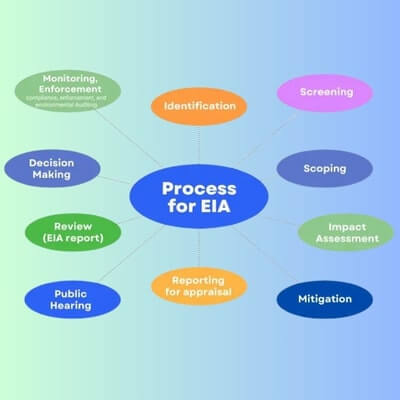
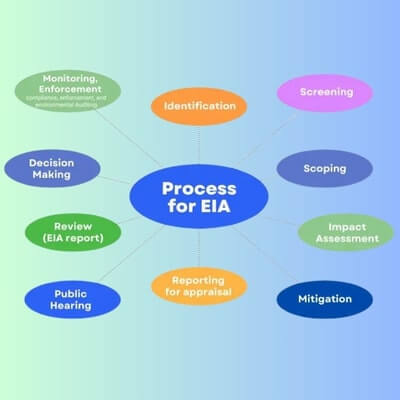
Environment Clearance is the mandatory requirement of existing and new Projects (Industries and construction Projects) listed in the Environment Impact Assessment (EIA) 2006 September Notification. EIA provides valuable information to decision-makers, project proponents, and local communities. Furthermore, it provides opinions to reduce adverse effects and shape the projects associated with environmental considerations. Below we explain the Environment Clearance Process in India.
1. Site Identification and Selection
The Environmental process involves careful consideration of siting guidelines, aiming to ensure that projects are situated in locations that minimize negative impacts on the environment and surrounding communities while complying with regulatory requirements.
- Public Consultation
- Regulatory Approval
- Environment Clearance
2. Project Categorization
The Ministry of Environment, Forests & Climate Change (MoEF&CC) has categorized projects into different classifications based on their potential environmental impact. These classifications include A, B1, and B2. Category A projects are at the national level and require clearance from the MoEF&CC, Category B projects are considered dealt with at the state level by the State Level Environmental Impact Assessment Authority (SEIAA).
- Condition and mitigation measures
- Monitoring and compliance
- Public consultation
3. Screening
The Screening procedure is a crucial and initial step in the environmental impact assessment framework. It helps identify projects that necessitate a more comprehensive evaluation. Moreover, it ensures that used resources are targeted on thoroughly assessing and addressing potential significant environmental impacts.
- Comprehensive EIA
- Early Project Evaluation
- Identification of significant impacts
4. Scoping
The Scoping process defines the parameters of the assessment, and specifies the environmental issues to be addressed such as air quality, soil conditions, water quality, biodiversity, noise levels, etc, and socio-economic aspects, and incorporates public and stakeholder inputs (NGOs).
- Identification of the need for EIA
- Focus on key concerns
- Adaptability and Iterative nature
6. Baseline Data Collection
Baseline data collection offers essential information about the existing environmental conditions. This baseline data serves as a foundation for the subsequent stages of the environmental impact assessment, that allowing potential impacts of the proposed project on air quality, water quality, biodiversity, and other relevant aspects.
- Environmental monitoring equipment
- On-site surveys
- Sample collection and analysis
- Remote sensing technologies
7. Submission of EIA Report and Assessment by SPCB
After preparing the EIA report by site identification, screening, scoping, and baseline data collection. The investor submits it to the State Pollution Control Board (SPCB) and the State Forest Department. They review the report to check the quality and quantity of pollutants the project might release. Also they check that your project meets all regulatory standards. If everything looks good the SPCB gives its approval by issuing an Environmental Clearance (EC) certificate.
- Evaluation of the control measures
- No objection Certificates
- Approval for Environmental Clearance Process in India
8. Public Hearing
Now the EIA reports are available for public consultation It provides a legal platform that involves sharing information about the project and its potential impacts and gathering feedback from local communities, NGOs, and other stakeholders. The Public Hearing is crucial for transparency and to ensure that the concerns and suggestions regarding the Environment Clearance Process in India.
- Community Meeting
- Evaluate the suggestion
- Considering public input
9. Application Submission to MoEF
In the next step to start the project, the form is submitted to the Ministry of Forest and Environment (Project A) or the state government (Project B category). It includes important papers such as the EIA report, EMP, NOC, and public hearing details. The aim is to get approval from the SPCB / MoEF before moving forward with the project.
- Submission to MoEF
- Review by MoEF
- Conditions and Approvals
10. Environmental Appraisal
After that, the Ministry sends your project details to special committees known as Environmental Appraisal Committees. They set up for different sectors like industries or mining, and regularly meet to review projects. Sometimes, for A-grade projects, they may also arrange public meetings to get people's opinions and suggestions.
The Ministry announces these public meetings in newspapers thirty days before the start of the project. After considering everything, the committee makes recommendations— declaring if they think the project should be approved or not.
Finally, the Appraisal Committee goes through these recommendations and decides whether to give the green light to a project or not.